

Decision intelligence platforms are reshaping how businesses make strategic choices in today’s data-heavy world. Recent studies show that 74% of people say their daily decisions have multiplied tenfold in just three years. Business leaders don’t fare much better – 85% experience “decision distress” and often regret or second-guess their choices.
Traditional business intelligence helps companies understand past and present data. The complex digital world needs quicker, more strategic responses than these tools can offer. Lost revenue across enterprises runs into billions due to the gap between insight and action. Decision intelligence tools solve this challenge. They combine artificial intelligence, predictive analytics, and automated execution to answer a simple question: “What should we do next?”
Gartner named decision intelligence a Top Trend, predicting major adoption by 2026. They stress the importance of intelligent simulation to prepare for ground scenarios. The benefits are clear. Companies get up-to-the-minute recommendations from predictive models. This turns organizations from reactive to proactive decision-makers. Many companies don’t deal very well with implementation though. They waste 60% of data investments, and decision-makers use only 22% of the informed insights they receive.
Your business can’t stick to old decision-making processes. Leaders feel stuck – 72% say too much data has frozen their ability to make choices. This piece will show you why and how to set up a decision intelligence platform before 2026 becomes your competitive turning point.
What is a Decision Intelligence Platform?
“Your BI stack is full. What you need now is a platform that improves decision confidence, not dashboard volume.” — Stravito Team, Insights management and decision intelligence platform experts
A decision intelligence platform (DIP) helps organizations design, manage, and automate their decision-making. These software solutions blend data, analytics, knowledge, and AI technologies. Traditional analytics tools tell you what happened before, but DIPs focus on what you should do next.
Organizations can make better choices through decision intelligence. This practical approach helps them understand and improve their decision-making process, evaluate outcomes, and learn from feedback. Teams can work together in these platforms to create, run, and control decision models that support both human and machine decisions.
How it is different from business intelligence
Business intelligence shows past data in dashboards and reports. You learn what already happened. DIPs take a different approach by guiding your next actions. This changes how organizations use data to make decisions.
These technologies have key differences:
| Aspect | Business Intelligence | Decision Intelligence |
| Focus | Describes what happened | Determines what to do about it |
| Scope | Serves analysts and data teams | Gives decision-makers across the business more power |
| Intelligence | Gives insights | Adds logic, strategy and automation |
| Data Usage | Works with subsets of data | Integrates all available information and context |
| Time Orientation | Retrospective | Predictive and prescriptive |
| Decision Support | Requires manual interpretation | Offers recommendations and automation |
Business intelligence has clear limits. BI dashboards show static insights from data snapshots instead of continuous information streams. They also lack strong predictive features, so decision-makers must figure out future scenarios by themselves.
DIPs solve these problems by offering better decision support and automation options. Leaders can make decisions faster and with more confidence. Routine operational decisions can run automatically based on proven analytical models. DI builds on BI’s foundation and takes analysis further with advanced predictive and prescriptive analytics.
Why 2026 is a tipping point for adoption
Latest research shows decision intelligence will drive more than a third of critical business decisions in enterprises by 2026. Manual analysis and older tools will fall behind. Organizations are changing how they handle complex decisions.
This shift comes at the right time. The 2024 Gartner CDAO Agenda Survey reveals 33% of organizations already use decision intelligence. Another 17% plan to start within six months, while 19% will deploy in six to 12 months. About 25% are exploring deployment in 12 to 24 months. Only 7% showed no interest, proving its value to businesses.
Companies need faster results and less risk. Decision intelligence has grown from small tests to crucial company-wide strategies. As businesses transform digitally, decision intelligence reshapes today’s data-heavy business world.
These platforms keep getting better. Generative AI currently brings speed and scale to insights, but even more powerful features are coming. AI agents will soon handle complex tasks across workflows. Multimodal AI will combine text, voice, image and behavioral signals for a better understanding of business situations.
Successful enterprise adoption needs more than just speed. Trust, data readiness, clear explanations, and smooth integration are must-haves. Companies that start using decision intelligence by 2026 will move ahead of their competition. They’ll sense changes, make decisions, and take action faster.
Core Components of Decision Intelligence Platforms
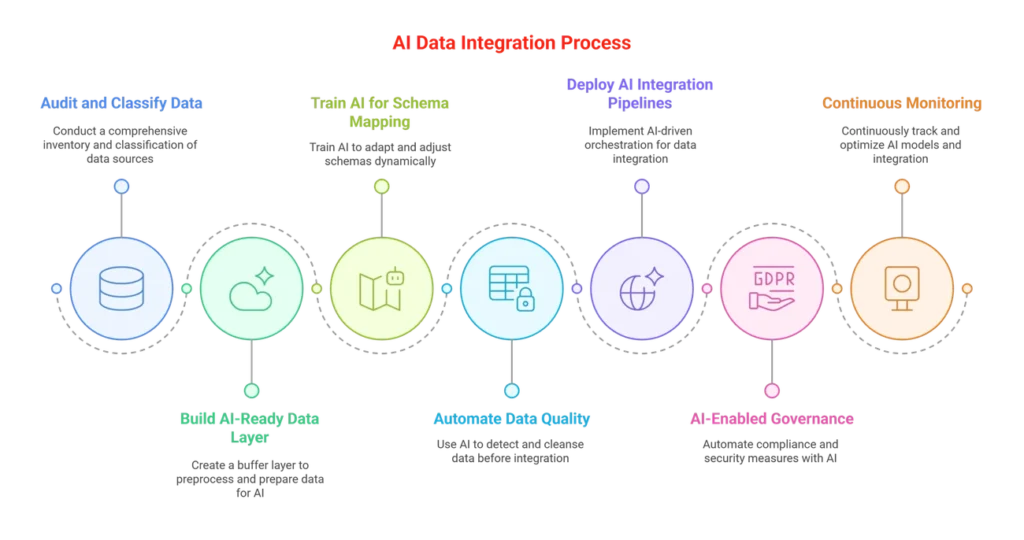
Image Source: Azilen Technologies
Decision intelligence platforms combine several core elements that work together naturally to boost decision-making. You need to understand these basic building blocks to select the right solution that meets your needs.
Data integration and unification
The foundation of any decision intelligence platform starts with knowing how to process and unite data from different sources. These platforms connect to multiple internal systems, external feeds, and third-party applications, creating a detailed view of your business landscape. The technology unites structured data (like transaction records) and unstructured data (such as customer feedback, documents, images) into a central repository. Advanced platforms use entity resolution capabilities to resolve identities and relationships across sources intelligently and create accurate profiles for each entity.
AI and machine learning models
The analytical engine powers decision intelligence platforms. These systems use sophisticated algorithms to turn raw data into practical recommendations. Most platforms include predictive analytics that forecast trends and outcomes by analyzing historical patterns. They spot unexpected changes in business metrics automatically. Machine learning models learn from new data inputs continuously and improve accuracy over time. These AI capabilities help identify key drivers behind business changes. Organizations can understand not just what happened but why it occurred.
Automation and workflow triggers
Decision intelligence platforms can trigger actions based on predefined rules and conditions once they generate insights. They include decision structures like rulesets, decision trees, and decision models. Business people can define risk appetite and enforce business policies. Many systems let you review end-to-end decision strategies against historical scenarios. This allows safe iteration without business risk. The systems can route complex cases to human experts while handling routine decisions automatically.
Human judgment and contextual input
Human expertise remains vital within decision intelligence frameworks despite sophisticated automation. These platforms recognize that human context shapes what AI does and how people use its output. They often include shared environments where analysts, decision-makers, and engineers can exchange insights and make decisions together. The most effective platforms treat AI as a partner that amplifies human capabilities rather than replacing them. This human-in-the-loop approach works better than manual processes and achieves higher accuracy than fully automated decision-making.
Top Benefits of Using Decision Intelligence Tools
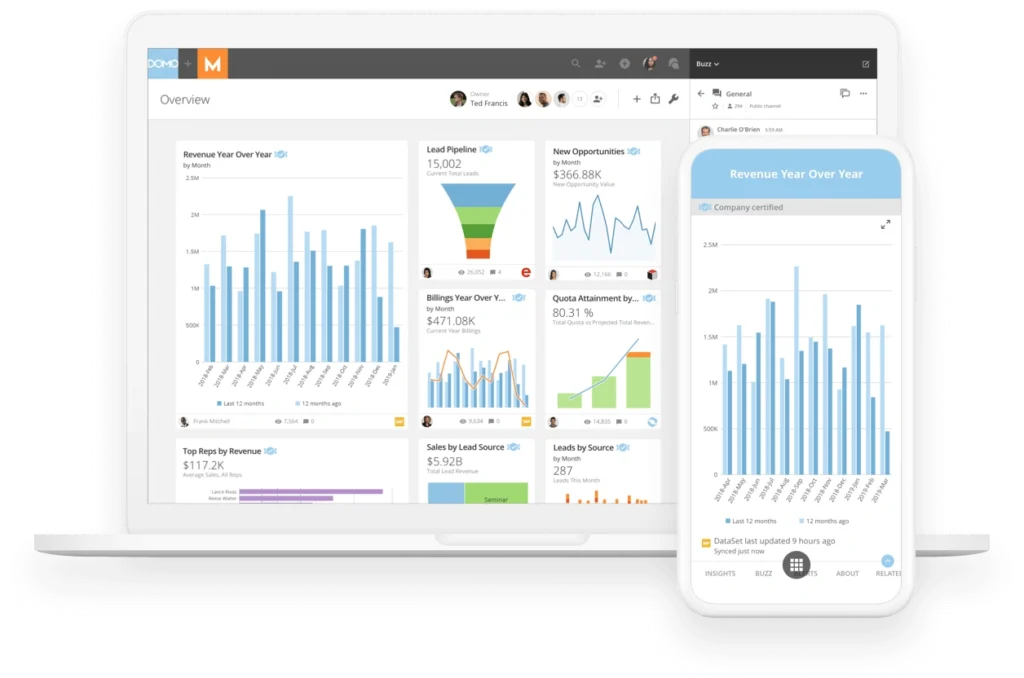
Image Source: Domo
“The real differentiator in 2026 is data quality and domain-specific intelligence – the ability to know exactly which components, suppliers, and geographies expose you to risk before a disruption hits.” — Unnamed Expert, Industry expert in supply chain and AI
A decision intelligence platform will give your business major benefits that affect your bottom line. Note that companies using decision intelligence can expect 20% better decision accuracy and triple their process efficiency by 2026.
Faster and more accurate decisions
Real-time logic execution has replaced traditional decision cycles that took days or hours. Now decisions happen in milliseconds. Companies that use simulation tools see 30-40% faster planning cycles in their operations. A leading global insurer uses AI-driven models to simulate claims and policy changes. This cut their decision cycle time by 35%. Your business can now grab market opportunities before competitors even notice them.
Reduced risk and uncertainty
Your teams can make smarter decisions by seeing outcomes before they happen. They can simulate future scenarios and model different choices when faced with uncertainty. Companies that adopted these tools in 2021 lost 25% less money from poor decisions. You can develop backup plans for market changes and unexpected challenges by analyzing different scenarios.
Improved strategic alignment
Decisions made in isolation often work against broader business goals when teams don’t line up properly. Decision intelligence solves this by putting strategic objectives right into decision-making workflows. It connects business intelligence with AI and brings your data together for consistent insights. Teams work in harmony through shared governance frameworks. This creates unity at every level of your organization.
Operational efficiency gains
Decision intelligence tools help businesses work better through:
- Automated handling of repetitive analysis tasks
- Clear rules that remove confusion
- Much less manual processing time
- Lower costs from better productivity and fewer errors
Your team can focus on strategic projects that matter more because organizations with generative models in their decision workflows respond 40% faster in core operations.
Improved customer experience
Decision intelligence makes customer interactions personal and responsive. AI-powered next best experience can boost customer satisfaction by 15-20%, increase revenue by 5-8%, and cut service costs by 20-30%. One case study showed an AI-driven approach led to 800% higher customer satisfaction. It also reduced high-value at-risk customers’ intention to leave by 59%. Your customer support teams can help customers faster and more accurately, whatever industry you’re in.
Key Decision Intelligence Use Cases in 2026
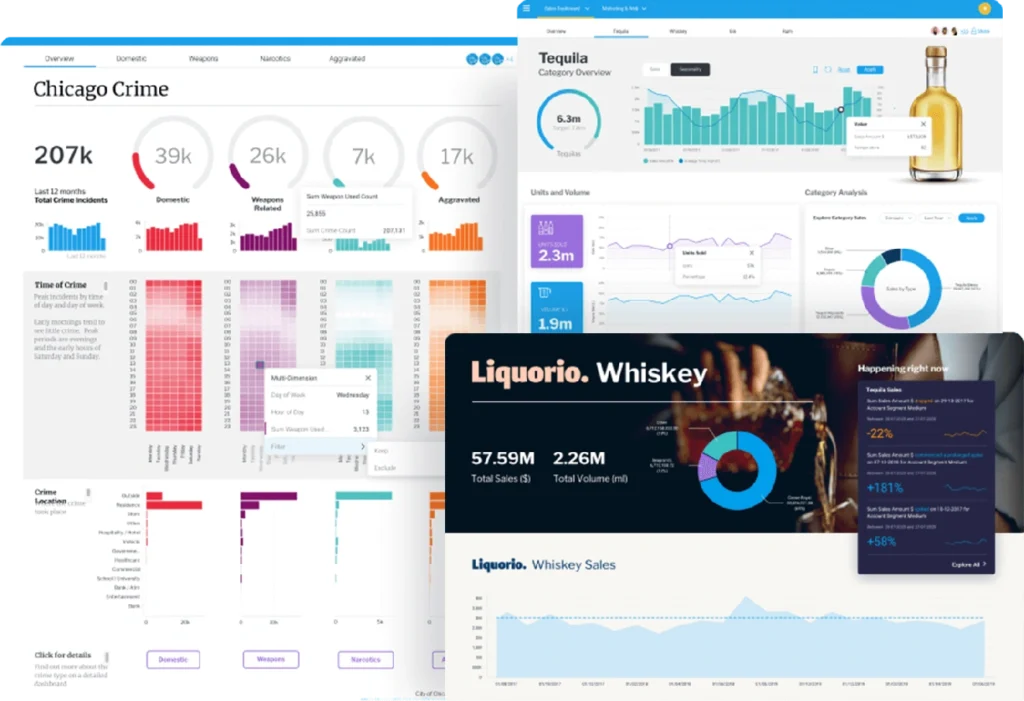
Image Source: Yellowfin BI
Decision intelligence platforms will reshape business operations across functions by 2026. Organizations will deploy these maturing applications in key areas to gain competitive edges.
Product development and market research
Teams now use decision intelligence tools to connect qualitative feedback with behavioral data, which reveals unmet needs and friction points. The days of waiting weeks for survey results are gone – teams can tap into live market signals and explore synthetic consumer responses. Product development cycles that once took months can now finish in days, which speeds up market decisions and creates better product-market fit.
HR and talent management
Organizations can optimize their workforce strategies through talent intelligence platforms that combine skills data from multiple sources into one universal taxonomy. Companies can understand their current and adjacent skills better and identify ways to “build, buy and borrow” future talent. Leaders can make smart decisions about hiring, restructuring, and reskilling initiatives. The platforms help predict skill gaps and workforce needs before problems surface.
Cybersecurity and risk mitigation
Decision intelligence platforms give organizations clear visibility of their environments, live threat detection, and predictive analytics for cybersecurity. An ASEAN bank that implemented these capabilities saw network security violations drop by 90% and reduced their phishing attack response time by 97.8%. AI-powered security automation can start protective actions within seconds, which minimizes damage from cyberattacks.
Supply chain and logistics optimization
A frozen food manufacturer saved $1.1 million annually by using decision intelligence to optimize deployment planning. These platforms help organizations predict disruptions, manage inventory, adjust logistics on the fly, and work better with suppliers. Gartner believes generative AI models will power 25% of KPI reporting in supply chains by 2028.
Financial forecasting and planning
Financial planning and analysis (FP&A) teams see remarkable improvements with decision intelligence: planning costs drop 25%, budget cycles speed up by 33%, overall forecast accuracy improves by 4%, and sales forecast errors decrease by 57%. Teams can run multiple scenarios instantly and generate more accurate financial forecasts while updating scenarios frequently for better insights.
How to Choose the Right Decision Intelligence Platform
The right decision intelligence platform needs a careful review of several important factors. Your organization’s specific needs should guide the investment through a well-laid-out process.
Assessing your data maturity
A detailed data maturity assessment should review your people, processes, and technology at the start. This review will show the strengths and weaknesses in your current data ecosystem. The full picture looks at five connected areas: your data quality, analytics tools, underlying technology, people skills, and company culture. Your position on the data maturity spectrum helps direct resources to areas that will make the biggest difference.
Evaluating platform capabilities
The best platforms come with resilient AI capabilities, automation engines, and shared workspaces. You need solutions that combine data unification and decision automation features. Platforms work best with automation for routine decisions while complex cases go to human experts. Your review should check security features like role-based access, audit trails, and encryption.
Ensuring integration with existing systems
The platform must have a continuous connection with your current technology stack. Look for open APIs and native connectors that work with ERP, CRM, and data lakes. The system should allow AI models to get feedback and fine-tune automatically without any issues. A unified technology stack makes decision workflows smoother and speeds up implementation.
Prioritizing explainability and governance
The platform you choose must put explainability first. This “white box” approach will give you complete tracking and auditing of every model, action, and outcome. Explainable AI (XAI) helps organizations track how model outputs match user expectations, which leads to better adoption and satisfaction. Good governance tools set up processes to manage data access, privacy, and lifecycle control. These features help with regulatory compliance and build lasting trust with customers.
Conclusion
Decision intelligence platforms mark a vital change from basic data understanding to taking strategic action. Your business must handle increasingly complex decisions where traditional BI tools don’t measure up. Your organization will gain an edge over competitors who still use outdated methods by adopting a decision intelligence platform before 2026.
Results prove the value—companies make faster decisions, face less uncertainty, line up strategies better, and optimize operations after making this change. Decision intelligence goes beyond analyzing past events and uses AI-powered recommendations and automation to guide future actions.
These platforms work well in product development, talent management, cybersecurity, supply chain, and financial planning. Each area shows clear benefits that boost your bottom line.
You need to evaluate your data maturity, check platform features, look at integration options, and review governance capabilities to pick the right platform. This step-by-step process will give you a solution that tackles your specific business challenges and adapts as your needs grow.
Decision intelligence marks the next step in turning data into business advantages. Companies that welcome these platforms now will build the operational flexibility needed in uncertain markets. We offer practical business insights to help you remain competitive with decision intelligence trends and implementation plans.
Companies that make smarter decisions faster will lead the market in 2026. Your path to decision intelligence starts today—you won’t question if you need these capabilities, but rather how fast you can put them to work for a competitive advantage.







![How to Build a Partnership Tracker That Actually Shows Results [Step-by-Step Guide]](https://psinc.io/wp-content/uploads/2025/09/September-26th-Website-1080x675.webp)

